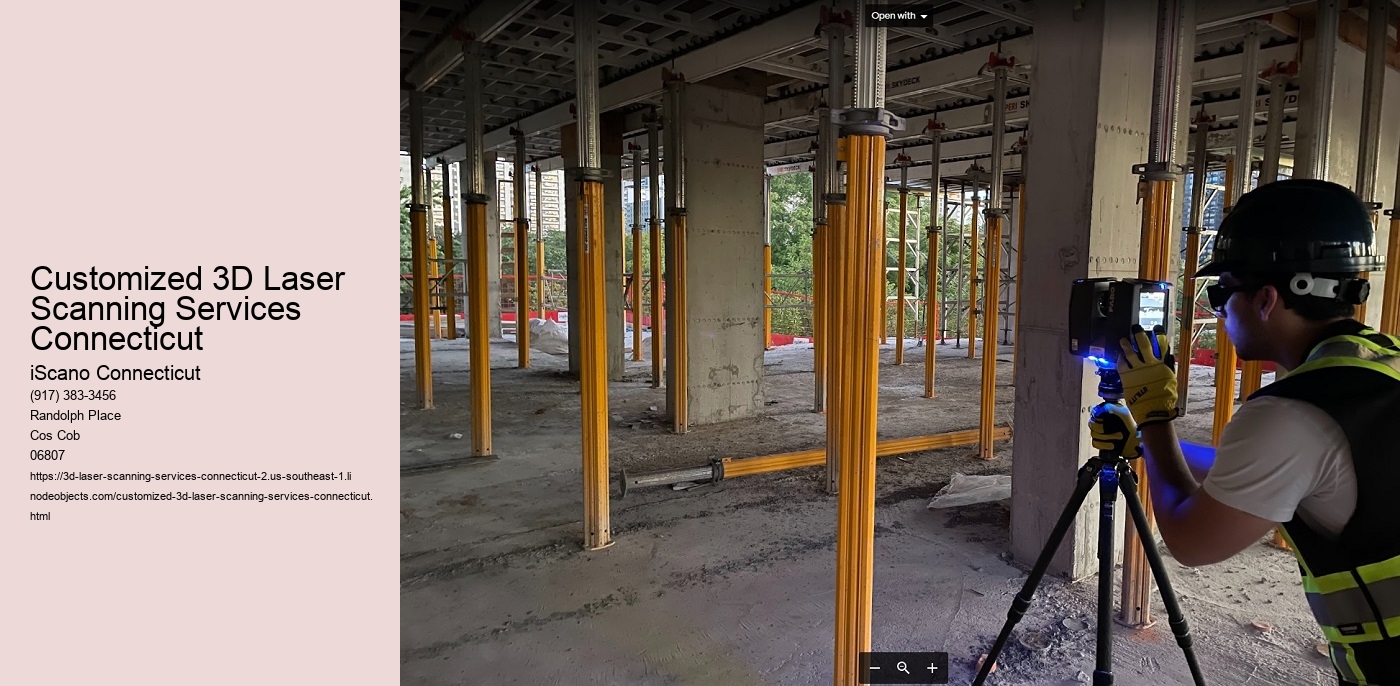
Revolutionizing Mapping and Evaluating: 3D Laser Scanning Redefines Connecticut'' s Visual Landscape Advancement in visualization has taken a gigantic leap onward with the advent of 3D laser scanning technology. Customized 3D Laser Scanning Services Connecticut . This innovative tool is transforming the means we perceive and connect with our surroundings, specifically in the context of mapping and evaluating in Connecticut. With its unparalleled accuracy and performance, 3D laser scanning is improving industries and opening brand-new opportunities for urban planning, infrastructure development, heritage conservation, and far more.
Connecticut, with its diverse terrain and rich social heritage, provides a myriad of challenges and chances for visualization technologies. Traditional methods of mapping and checking frequently battle to capture the complex details of its landscapes and structures. However, 3D laser scanning offers a remedy that exceeds these restrictions, supplying extremely accurate and detailed representations of both natural and man-made settings.
Among the vital advantages of 3D laser scanning is its capability to catch data quickly and non-invasively. By releasing laser pulses and measuring the moment it considers them to return, scanners can produce specific three-dimensional models of items and landscapes with remarkable rate. This performance is specifically useful in Connecticut, where tasks usually encounter limited deadlines and complicated surface.
Furthermore, the degree of information caught by 3D laser scanning is exceptional. From the intricate exteriors of historic structures in New Place to the rugged topography of the Litchfield Hills, every nuance is consistently replicated in the resulting electronic versions. This level of fidelity not just boosts the precision of mapping and evaluating efforts but additionally supplies useful understandings for conservation and remediation jobs.
Along with its accuracy and performance, 3D laser scanning provides adaptability that is unmatched by standard techniques. Whether it'' s catching the layout of a building and construction site in Stamford or recording the problem of a bridge in Hartford, scanners can adapt to a large range of environments and applications. This flexibility makes them indispensable tools for engineers, designers, archaeologists, and urban coordinators throughout Connecticut.
Additionally, the data accumulated via 3D laser scanning can be easily incorporated right into various software platforms for more analysis and visualization. By incorporating scan information with geographic details systems (GIS) or developing info modeling (BIM) software application, stakeholders can obtain deeper understandings into spatial connections, identify potential concerns, and make even more educated choices. This combination is driving technology in areas such as city design, transport planning, and ecological monitoring.
Past its functional applications, 3D laser scanning is also contributing to the conservation and documents of Connecticut'' s social heritage. By electronically capturing archaeological sites, monoliths, and artifacts, scanners are producing digital archives that can be accessed and researched for generations to come. This not only aids to guard these vital social properties however also supplies scientists with very useful resources for research study and analysis.
Nonetheless, in spite of its countless benefits, the widespread adoption of 3D laser scanning in Connecticut is not without obstacles. Cost factors to consider, technological expertise, and information management concerns are simply a few of the elements that companies have to navigate when executing scanning projects. Furthermore, the quick pace of technical innovation means that practitioners must frequently upgrade their skills and devices to remain in advance of the contour.
Finally, 3D laser scanning stands for a transformative innovation in visualization that is improving the means we perceive and engage with our environment. In Connecticut, this technology is opening brand-new possibilities for mapping, checking, and cultural heritage conservation, while also driving innovation in a variety of sectors. As the innovation continues to develop, its possible to revolutionize visualization in Connecticut and beyond is virtually infinite.